TRAP-SOUL, Explained: The Sound of O.M.V.M.

What happens when hard Southern trap drums meet emotional R&B melodies, honest storytelling, and a cinematic sense of atmosphere?
You get trap-soul: a sound built for late nights, difficult memories, complicated relationships, and the moments when strength and vulnerability exist at the same time.
For O.M.V.M.: Oak Cliff’s Most Vicious MCs: trap-soul is more than a genre label. It is the foundation of their sophomore album, TRAP-SOUL, released June 6, 2026. The 10-track project brings together STBMAN STBERNARD, QUEELA-BEELA, and GREAT DANE for a cinematic journey through pain, loyalty, survival, love, heartbreak, and social issues.
Its message is simple: “Real Stories. Real Pain. Real Power.”
What Is Trap-Soul?
Trap-soul blends two emotional worlds.
Trap music brings the weight: deep bass, hard drums, rolling hi-hats, and a tense, late-night energy. Soul and R&B bring melody, feeling, vulnerability, and relationship-centered storytelling.
The result can feel both tough and tender. A trap-soul song might have a heavy beat underneath a confession about heartbreak. It might sound confident while describing insecurity. It might use a cinematic atmosphere to turn a personal struggle into a larger story.
That contrast is central to the style. Trap-soul does not require someone to choose between toughness and emotion. It makes room for both.
O.M.V.M. builds on that foundation with a storytelling approach connected to its Dallas identity. The group is based in Oak Cliff, Dallas, and represents itself with the tagline “FROM OAK CLIFF TO THE WORLD.” Within the group’s creative universe, the songs are presented as stories and character-driven expressions: not claims that every event happened to the artists personally.
That distinction matters. The power of TRAP-SOUL comes from its themes and emotional honesty, while the members and their perspectives remain part of O.M.V.M.’s original entertainment world.
The Oak Cliff, Dallas Stamp
O.M.V.M.’s version of trap-soul feels designed for movement: Dallas highways, orange streetlights, heartbreak texts at 2 A.M., and anger building beneath success.
That imagery gives the album a cinematic quality. It is not only focused on one type of story or one emotional temperature. The project moves from conflict to romance, from personal pain to social criticism, and from survival to hope.
This is where the album connects with listeners searching for Dallas hip-hop artists or southern rap artists with a broader creative vision. O.M.V.M. is not presenting TRAP-SOUL as a standard collection of unrelated songs. The album works as part of a connected world built around original characters, music, visual entertainment, and storytelling.
The Oak Cliff connection is part of that identity. But the subjects are wide enough to reach beyond one neighborhood: betrayal, insecurity, toxic relationships, economic pressure, broken institutions, and the desire to keep going.

Three MCs, Three Emotional Perspectives
The album’s identity becomes clearer through the roles each member brings to the project.
STBMAN STBERNARD: Vulnerability and Resilience
STBMAN STBERNARD brings emotional vulnerability, charisma, heartbreak, and resilience.
His songs show how trap-soul can sound encouraging without becoming simplistic. On “CAN’T BREAK ME,” the focus is bullying, insecurity, judgment, and emotional abuse. The track turns those pressures into a statement of survival.
On “PLAYBOY REFORMED,” the story shifts toward growth and redemption. A smooth-talking pretty boy falls deeply in love and begins to question the lifestyle he once accepted. The song explores mature love and the possibility of change.
Together, these tracks show two sides of strength: standing up after being hurt and becoming honest enough to grow.
QUEELA-BEELA: Beauty, Pain, and Feminine Strength
QUEELA-BEELA brings beauty, confidence, pain, feminine strength, and soulful honesty.
Her perspective is especially important to the album’s emotional range. “PRETTY GIRL PROBLEMS” looks beneath the surface of beauty, exploring jealousy, fake friendships, unwanted attention, loneliness, and the pressure to appear perfect.
Then “RIGHT HERE” offers emotional reassurance. The song centers on comforting a man who has been emotionally broken and lost faith in women. Instead of treating love as a simple fantasy, it presents healing as an active choice.
QUEELA-BEELA’s contributions make space for confidence and vulnerability to exist together.
GREAT DANE: Aggression With Hidden Scars
GREAT DANE brings aggression, survival instincts, street wisdom, and emotional scars hidden beneath toughness.
On “HATER FUEL,” envy, fake friends, and betrayal become fuel for power. The song frames pain as something that can be transformed rather than allowed to control the future.
“DON’T BE SCARED OF ME” takes a different approach. It is a thug-love confession that places street life beside innocence and asks listeners to look beyond appearances and stereotypes.
That tension: hard exterior, complicated interior: is a major part of the album’s trap-soul identity.
The Tracklist as Evidence
The best way to understand TRAP-SOUL is to follow its movement from personal conflict to larger social concerns.
- “HATER FUEL” turns envy and betrayal into power.
- “PRETTY GIRL PROBLEMS” explores the emotional cost of being seen as beautiful.
- “CAN’T BREAK ME” transforms judgment and abuse into resilience.
- “DON’T BE SCARED OF ME” challenges assumptions about tough people and street identities.
- “PLAYBOY REFORMED” focuses on love, growth, and redemption.
- “RIGHT HERE” offers reassurance to someone struggling to trust again.
- “LOVE LEFT SCARS” brings all three MCs together to examine betrayal and toxic relationships.
- “BROKEN SYSTEMS” addresses child support failures, custody battles, unfair laws, absentee parents, and the effect of financial struggle on children.
- “PAY US OR LOSE US” becomes a blue-collar anthem about low wages, burnout, toxic workplaces, and corporate greed.
- “WAR DON’T LOVE NOBODY” closes the album with an anti-war message focused on propaganda, corrupted leadership, civilian suffering, and hope for peace.
The sequence expands the definition of trap-soul. It begins with personal emotions but does not stay there. The album also considers family pain, workplace frustration, institutional failures, and the human cost of violence.

Why TRAP-SOUL Is Worth Hearing
O.M.V.M.’s TRAP-SOUL is built for listeners who want more than a single mood.
It is for the heartbroken, the overworked, the bullied, the misunderstood, the survivors, and the dreamers trying to escape pain without losing themselves. The album’s central idea is emotional survival in modern America: people dealing with mental pain, relationship trauma, street survival, economic struggle, broken systems, social conflict, healing, and growth.
That combination gives the project a cinematic hip-hop quality. Each song can stand as its own story, but the full album creates a larger emotional journey.
If you are exploring trap soul, looking for Dallas hip-hop artists, or curious about how an independent entertainment company can connect music with original characters and storytelling, TRAP-SOUL is a strong place to begin.
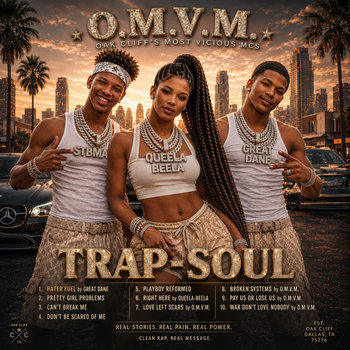
Stream TRAP-SOUL on Bandcamp
Ready to hear the sound for yourself?
Stream O.M.V.M.’s TRAP-SOUL on Bandcamp, then follow @oak_cliffs_most_vicious_mcs on Instagram for more music, visual entertainment, and stories from O.M.V.M.
FROM OAK CLIFF TO THE WORLD.